
The Connecticut Racial Profiling Prohibition Project’s (CTRP3) recent public service announcement is a carefully crafted 60-second spot that educates viewers about statewide efforts to ensure traffic safety and eradicate racial profiling.
What you won’t see is the more than six months of production work that provided an opportunity for a recent graduate of UConn’s Digital Media & Design group to make his directorial debut.
“It felt like a big stepping stone,” said Matt Johnson (‘25 BFA), an Old Saybrook native who directed the spot. “It was real work, not just a school project, but still connected to UConn.”
CTRP3 is a statewide advisory board that oversees implementation of the Alvin W. Penn law which prohibits racial profiling by police. Run by project manager Ken Barone, associate director of the Institute for Municipal and Regional Policy at UConn’s School of Public Policy, the organization examines traffic stop data and works to promote transparency, accountability, and trust between law enforcement and the communities they serve.
While the subject matter is complex, the goals of the PSA are twofold: communicate clearly, concisely, and in a way that resonates with a broad audience. And guide viewers to the CTRP3 website for more information. There they can learn about the law and how to file a report if they believe they have been racially profiled during a traffic stop.
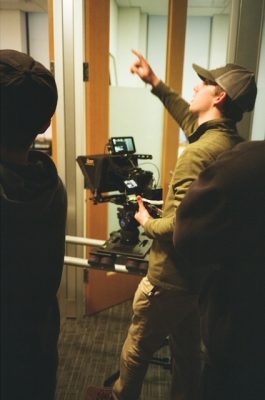
In hiring a visual storyteller for this project, IMRP drew from an internal pipeline. Assistant professor Justin Liberman connected the Institute with students from his narrative production class. Among them was Matt Johnson, whom Professor Liberman recognized for both his technical ability and his readiness to take on a larger role.”
“I hadn’t heard of the IMRP or CTRP3 before the first call,” Johnson said. “But with video, you get thrown into these projects, and it’s your job to figure out how to communicate them.”
That challenge quickly became part of the appeal.
Johnson had been producing his own content since high school and came to UConn hoping to capitalize on its strong program and local connections. He earned his degree in just three years and was ready to put his skills to work.
The PSA project came at a pivotal moment, just as he was transitioning from student to professional. For the first time, Johnson was managing a full production with a budget, coordinating a team, and navigating the expectations of multiple stakeholders.
“It wasn’t just making a video. It was running a production,” Johnson said. “I’d never done a project on this scale with fiscal responsibility. Figuring that out was huge.”
To help him manage the budget and the hiring process, Johnson brought on board a producer – Kevin Mezick, a commercial and narrative director who has served in other UConn collaborations. While Mezick assisted with location scouting, production planning, and scheduling, Johnson could focus on the visual aspects, his preferred area, and directing the spot.
“Once we did the location scout and broke everything down, I realized this is totally doable,” he said. “That’s when the vision really fell into place.”
From concept through final editing, the PSA was developed through close collaboration between Johnson and IMRP staff, with script input from the CTRP3 advisory board.
That collaboration helped ensure that the message was both accurate and effective, particularly given the complexity of the topic. At the same time, it required translating creative ideas into terms accessible to partners less familiar with video production and securing and maintaining buy-in on the concept.
“It was a huge awakening,” Johnson said of multiple meetings with CTRP3’s Community Outreach subcommittee members who weighed in on the script. “Understanding how people feel in those (traffic stop) situations was something I hadn’t experienced before. I wanted to be sure to represent those experiences thoughtfully and accurately.”
The PSA captures the power of perspective. It reminds us how important it is to listen, understand, and find common ground.
“The PSA captures the power of perspective,” agreed CTRP3 project manager Ken Barone. “By centering each person’s lived experience, the video reminds us how important it is to listen, understand, and find common ground.”
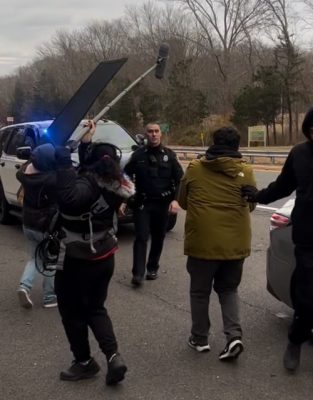
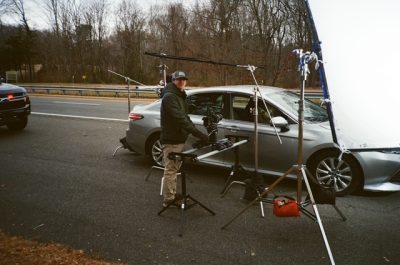
Scripting was not the only challenge. Production was scheduled over two days with the primary scene featuring an interaction between a driver and a police officer on the side of a roadway. The shoot was pushed back from late summer to fall and then early winter. By then, the weather was a factor.
On the day of the shoot, a looming snowstorm added another layer of uncertainty. Rescheduling would not have been ideal given the number of on-camera and behind-the-scenes people involved. The crew anxiously watched the weather and made alternate arrangements for stand-in participants.
Despite the risks, the filming on location enhanced the production. Under overcast, gray skies, the roadway scene wrapped just before sleet and rain began, capturing conditions that enhanced the tone of the final piece.
“To get something authentic, you have to do it for real,” Johnson said.
IMRP connections and CTRP3 advisory board helped bring that authenticity. While Johnson hired an actor to portray the driver, a real-life officer from the Madison police department played the role of the on-scene officer. And local police supported and ensured the safety of the crew during the roadway shoot.
The remainder of the filming took place indoors, at UConn’s Hartford Times Building, where the IMRP is housed, and on a second shoot day with West Hartford’s Chief of Police Vernon Riddick at his offices. Several in-house contributors appear on-screen including CTRP3 project manager Ken Barone, program administrator Erica Escobar, and Anya McGlaughlin, an IMRP research intern and School of Public Policy master’s candidate.



For Johnson, who had often worked independently or with students and classmates, the experience marked a shift.
“Having a full team, that was huge for me,” he said of the six crew members he supervised. “It changes what you’re able to create.”
In addition to editing and creating graphics for the PSA, Johnson also took on music creation. Music licensing for the original spot is limited to digital distribution, so Johnson scored his own music for a broadcast-friendly version of the video.
“It was exciting to support a recent UConn graduate at the beginning of his professional filmmaking career,” said Ken Barone. “I am confident that his work will continue to make a difference as he uses his skills to inspire these thoughtful conversations.”
To that end, IMRP has contracted Johnson to create a second CTRP3 outreach video and another featuring the community forums it runs around the state. He’ll add that to his busy post-graduate schedule. In addition to running his own media company, Matt Johnson Media, he is working part-time as a video specialist with Miranda Creative, shooting commercial and social content for a variety of clients.
I want to be part of projects at this level. I want to be the one shaping what people see on screen.
“I want to be part of projects at this level full-time,” he said. “I want to be the one shaping what people see on screen.”
For IMRP, the collaboration reflects an ongoing effort to expand how its work is communicated and who helps tell those stories. Partnering with students and creating opportunities to connect with the Institute and its mission is a key priority, particularly for upcoming filmmakers interested in using media to explore issues related to public policy and social justice.
“This project showed what’s possible,” Johnson said. “When you bring together the right people, you can create something that really connects.”
By the Numbers: Bringing the PSA to Life
1 minute (60 seconds): Final runtime of the PSA
1 professional actor cast for the primary role
1 active-duty police officer featured on screen
2 days total filming, including on-location and interview shoots
3 IMRP staff and interns in on-screen roles
3 locations: Madison, Hartford, and West Hartford, CT including the main shoot at UConn’s Hartford Times Building
7 crew members including student and early-career collaborators
10+ hours production during winter conditions
TBD: PSA reach across web and social channels