News

IMRP Supports UConn Student’s Directorial Debut with Racial Profiling PSA 

April 27, 2026

The Connecticut Racial Profiling Prohibition Project’s (CTRP3) recent public service announcement is a carefully crafted 60-second spot that educates viewers about statewide efforts to ensure traffic safety and eradicate racial profiling. 

What you won’t see is the more than six months of production work that provided an opportunity for a recent graduate of UConn’s Digital Media & Design group to make his directorial debut. 

“It felt like a big stepping stone,” said Matt Johnson (‘25 BFA), an Old Saybrook native who directed the spot. “It was real work, not just a school project, but still connected to UConn.” 

CTRP3 is a statewide advisory board that oversees implementation of the Alvin W. Penn law which prohibits racial profiling by police. Run by project manager Ken Barone, associate director of the Institute for Municipal and Regional Policy at UConn’s School of Public Policy, the organization examines traffic stop data and works to promote transparency, accountability, and trust between law enforcement and the communities they serve. 

While the subject matter is complex, the goals of the PSA are twofold: communicate clearly, concisely, and in a way that resonates with a broad audience. And guide viewers to the CTRP3 website for more information. There they can learn about the law and how to file a report if they believe they have been racially profiled during a traffic stop.  

A man directing behind the camera
Matt Johnson behind the camera

In hiring a visual storyteller for this project, IMRP drew from an internal pipeline. Assistant professor Justin Liberman connected the Institute with students from his narrative production class. Among them was Matt Johnson, whom Professor Liberman recognized for both his technical ability and his readiness to take on a larger role.” 

“I hadn’t heard of the IMRP or CTRP3 before the first call,” Johnson said. “But with video, you get thrown into these projects, and it’s your job to figure out how to communicate them.” 

That challenge quickly became part of the appeal. 

Johnson had been producing his own content since high school and came to UConn hoping to capitalize on its strong program and local connections. He earned his degree in just three years and was ready to put his skills to work. 

The PSA project came at a pivotal moment, just as he was transitioning from student to professional. For the first time, Johnson was managing a full production with a budget, coordinating a team, and navigating the expectations of multiple stakeholders. 

“It wasn’t just making a video. It was running a production,” Johnson said. “I’d never done a project on this scale with fiscal responsibility. Figuring that out was huge.” 

To help him manage the budget and the hiring process, Johnson brought on board a producer – Kevin Mezick, a commercial and narrative director who has served in other UConn collaborations. While Mezick assisted with location scouting, production planning, and scheduling, Johnson could focus on the visual aspects, his preferred area, and directing the spot. 

“Once we did the location scout and broke everything down, I realized this is totally doable,” he said. “That’s when the vision really fell into place.” 

From concept through final editing, the PSA was developed through close collaboration between Johnson and IMRP staff, with script input from the CTRP3 advisory board. 

That collaboration helped ensure that the message was both accurate and effective, particularly given the complexity of the topic. At the same time, it required translating creative ideas into terms accessible to partners less familiar with video production and securing and maintaining buy-in on the concept.  

“It was a huge awakening,” Johnson said of multiple meetings with CTRP3’s Community Outreach subcommittee members who weighed in on the script. “Understanding how people feel in those (traffic stop) situations was something I hadn’t experienced before. I wanted to be sure to represent those experiences thoughtfully and accurately.” 

The PSA captures the power of perspective. It reminds us how important it is to listen, understand, and find common ground.

“The PSA captures the power of perspective,” agreed CTRP3 project manager Ken Barone. “By centering each person’s lived experience, the video reminds us how important it is to listen, understand, and find common ground.” 

a filming scene on the side of a roadway

Scripting was not the only challenge. Production was scheduled over two days with the primary scene featuring an interaction between a driver and a police officer on the side of a roadway. The shoot was pushed back from late summer to fall and then early winter. By then, the weather was a factor. 

On the day of the shoot, a looming snowstorm added another layer of uncertainty. Rescheduling would not have been ideal given the number of on-camera and behind-the-scenes people involved. The crew anxiously watched the weather and made alternate arrangements for stand-in participants.  

Despite the risks, the filming on location enhanced the production. Under overcast, gray skies, the roadway scene wrapped just before sleet and rain began, capturing conditions that enhanced the tone of the final piece. 

“To get something authentic, you have to do it for real,” Johnson said. 

IMRP connections and CTRP3 advisory board helped bring that authenticity. While Johnson hired an actor to portray the driver, a real-life officer from the Madison police department played the role of the on-scene officer. And local police supported and ensured the safety of the crew during the roadway shoot.

The remainder of the filming took place indoors, at UConn’s Hartford Times Building, where the IMRP is housed, and on a second shoot day with West Hartford’s Chief of Police Vernon Riddick at his offices. Several in-house contributors appear on-screen including CTRP3 project manager Ken Barone, program administrator Erica Escobar, and Anya McGlaughlin, an IMRP research intern and School of Public Policy master’s candidate. 

For Johnson, who had often worked independently or with students and classmates, the experience marked a shift. 

“Having a full team, that was huge for me,” he said of the six crew members he supervised. “It changes what you’re able to create.” 

In addition to editing and creating graphics for the PSA, Johnson also took on music creation. Music licensing for the original spot is limited to digital distribution, so Johnson scored his own music for a broadcast-friendly version of the video.  

View the PSA here

“It was exciting to support a recent UConn graduate at the beginning of his professional filmmaking career,” said Ken Barone. “I am confident that his work will continue to make a difference as he uses his skills to inspire these thoughtful conversations.”  

To that end, IMRP has contracted Johnson to create a second CTRP3 outreach video and another featuring the community forums it runs around the state. He’ll add that to his busy post-graduate schedule. In addition to running his own media company, Matt Johnson Media, he is working part-time as a video specialist with Miranda Creative, shooting commercial and social content for a variety of clients. 

I want to be part of projects at this level. I want to be the one shaping what people see on screen.

“I want to be part of projects at this level full-time,” he said. “I want to be the one shaping what people see on screen.” 

For IMRP, the collaboration reflects an ongoing effort to expand how its work is communicated and who helps tell those stories. Partnering with students and creating opportunities to connect with the Institute and its mission is a key priority, particularly for upcoming filmmakers interested in using media to explore issues related to public policy and social justice. 

“This project showed what’s possible,” Johnson said. “When you bring together the right people, you can create something that really connects.” 


A film director next to a car
on site in Madison, CT

By the Numbers: Bringing the PSA to Life 

1 minute (60 seconds): Final runtime of the PSA 

1 professional actor cast for the primary role 

1 active-duty police officer featured on screen 

2 days total filming, including on-location and interview shoots 

3 IMRP staff and interns in on-screen roles 

3 locations: Madison, Hartford, and West Hartford, CT including the main shoot at UConn’s Hartford Times Building 

7 crew members including student and early-career collaborators 

10+ hours production during winter conditions 

TBD: PSA reach across web and social channels 


CTRP3 Releases PSA Highlighting Efforts to Address Racial Profiling

April 23, 2026

The Connecticut Racial Profiling Prohibition Project (CTRP3), housed within the Institute for Municipal and Regional Policy (IMRP) at the University of Connecticut’s School of Public Policy, announced the release of a 60-second public service announcement titled “We Want You to Know…” to raise awareness about racial profiling and inform the public how to report concerns.

The PSA is part of CTRP3’s ongoing outreach efforts to ensure that individuals across Connecticut understand their rights and have access to resources related to fair and impartial policing. The video highlights Connecticut’s commitment to transparency, accountability, and data-driven oversight of traffic stops.

The video is designed to raise awareness and encourage action. Key messages include:

  • Racial profiling is prohibited in Connecticut and undermines trust between law enforcement and the communities they serve 
  • Connecticut supports fair and impartial policing through data collection, analysis, and ongoing oversight 
  • CTRP3 works collaboratively with community members, law enforcement, and policymakers to identify and address disparities in traffic stops 
  • Individuals have the right to report concerns about racial profiling 
  • Reporting promotes transparency, accountability, and continuous improvement in policing practices 

“Public awareness is a critical part of this work,” said Gail Hardy, CTRP3 Community Outreach Subcommittee Chair. “Through outreach and education, we want individuals to understand their rights and know that there is a process in place to report concerns. This PSA is one way we can help ensure that information is accessible to communities across Connecticut.”

Racial profiling is prohibited under Connecticut law and undermines trust between law enforcement and the communities they serve. Through data collection, analysis, and collaboration with community members, law enforcement agencies, and policymakers, CTRP3 works to identify and address disparities in traffic enforcement practices.

The PSA also emphasizes that individuals have the right to report concerns about racial profiling. Reporting plays a critical role in strengthening accountability and supporting continuous improvement in policing practices across the state. The video was directed by Matt Johnson, a UConn 2025 graduate. It features IMRP and CTRP3 staff and advisory board members, along with an officer from the Madison Police Department.

The video is available on the CTRP3 website, where viewers can access additional information, including reporting resources.

ReConnect CT: Digital Pathways Program Launches with Partner Event

March 19, 2026

The Institute for Municipal and Regional Policy (IMRP) at the University of Connecticut School of Public Policy convened public library leaders, researchers, and community partners this week at the UConn Hartford campus to officially launch ReconnectCT: Digital Pathways Program, a statewide initiative aimed at expanding digital access and technology education for people who are currently incarcerated or returning to Connecticut communities after incarceration. 

The kickoff summit brought together more than 35 participants representing library partners, evaluation teams, technical assistance providers, and community collaborators to align program goals, strengthen partnerships, and begin implementing the initiative across participating sites. 

“It was a great event for partners to meet, to network, and learn from each other,” said ReConnect CT project lead Irvine Peck’s-Agaya.

ReConnectCT: Digital Pathways is supported by $3.5 million in American Rescue Plan Act funding through the Connecticut Office of Policy and Management’s Criminal Justice Policy and Planning Division. The initiative addresses a growing digital divide that limits access to education, employment, health care, and essential services for justice-impacted individuals. 

Research conducted through the Connecticut Center for Digital Equity Research has highlighted the significant barriers many incarcerated individuals face in accessing technology and building digital skills. As everyday activities increasingly move online – from job applications to health care systems – people returning from incarceration often face additional obstacles navigating a technology-centric society. 

ReConnectCT aims to close this gap through a comprehensive strategy that combines digital literacy education, expanded technology access, and partnerships with public libraries, higher education institutions, and reentry organizations across the state. 

The program includes a Digital Pathways curriculum designed to teach practical skills such as basic computer use, internet navigation and online safety, digital communication, job searching and applications, and accessing essential services online. 

Public libraries play a central role in this effort. Through a competitive funding process, several Connecticut libraries are launching initiatives to expand services and digital literacy opportunities for justice-impacted individuals in their communities. 

Partner organizations attended the project launch at UConn’s Hartford campus

Among the early partners are the Hartford Public Library, which will expand digital literacy, financial literacy, and reentry support services in correctional facilities, halfway houses, and neighborhood library branches; the Hamden Public Library, which will offer digital navigation courses, individualized coaching, and legal resource programming; and the Douglas Library, which will expand technology access, digital learning resources, and workforce readiness services in a rural community; and Fairfield University’s DiMenna-Nyselius Library, which will provide hands-on digital literacy workshops and technology access for individuals returning from incarceration through a partnership with EMERGE Connecticut 

Tuesday’s kick-off included a presentation from the Brooklyn (NY) Public Library that demonstrated the scope and reach of their current projects, and how similar programs have been replicated across the country.

“This is new for us in Connecticut,” said Peck’s-Agaya. “Hearing what Brooklyn (Public Library – Outreach Service Department for Justice Initiatives) has done firsthand from people who have utilized the service and are now working at the library showed what’s possible. Many of our partner libraries are inspired to further expand their service proposals based on opportunities they can now envision.”

The initiative also includes partnerships with higher education institutions and reentry programs to support digital readiness and technology access for formerly incarcerated students continuing their education. Current partners include the Yale School of Medicine, Unlocked Labs, Urban Institute, and Full Citizen’s Coalition.

“The technical assistance discussion set the tone that support will be ongoing, which made the process feel more team-oriented,” said IMRP Policy and Research intern Leslie Sical, who assisted with the planning of the kickoff event. “Having been part of ReConnect CT from its inception, it’s rewarding to see partners come together with a shared understanding of the goals and a willingness to work through the details together.”

By bringing together libraries, educators, and community organizations and pairing them with technical support services, ReconnectCT seeks to expand opportunities, strengthen reentry outcomes, and build long-term partnerships that advance digital equity across Connecticut. 

“Partners in the state are accepting this bold vision and moving forward with normalizing their services inside prisons and halfway houses,” said Peck’s-Agaya, who notes the work is just getting started. “After a year and a half of planning, I’m really excited to see the program come to fruition.”

CTCIP Releases Annual Activities Report

February 24, 2026

Connecticut Children with Incarcerated Parents (CTCIP) released its 2025 annual report, highlighting activities to expand outreach, strengthen partnerships, and create meaningful, hands-on events and opportunities.

“This past year we’ve reinvented our commitment to raising awareness of the impact of parental incarceration on children,” said Irvine Peck’s-Agaya, IMRP operations coordinator who leads the CTCIP team. “We were very intentional about reaching out to people not already part of our network and building new connections.”

Those connections reflect expanded outreach and partnerships with the Connecticut Department of Correction, libraries across the state, and the UConn community. Highlights from the report include:

  • The continued creation and improvement of child-friendly visiting spaces at correctional facilities, including fresh paint, new furniture, books, toys, and child-centered activities designed to foster positive parent-child interaction and reduce stress during visits.
  • Hosting a post-holiday winter celebration at York Correctional Institution for children and their incarcerated mothers, including the gifting of age-appropriate toys and books for more than 30 children ranging from newborns to age 17.
  • The development and distribution of an asynchronous Training for Educators module to help teachers, administrators, and school staff better understand and support students impacted by parental incarceration.
  • Partnering with Connecticut libraries during October’s Parental Incarceration Awareness Month to distribute resources via public displays that reduce stigma and highlight available services.
  • Increasing CTCIP’s presence at the State Capitol, including testimony before the Committee on Children in support of legislation to improve higher education access for youth in foster and kinship care.
  • The release of a Statewide Action Plan in partnership with the Council of State Governments Justice Center and Rutgers University at Camden to outline evidence-based strategies to strengthen family connections, enhance parenting programs, and improve communication between children and incarcerated parents.
  • A UConn Hartford hygiene drive in partnership with The Alliance for Incarcerated Women to provide essential items to women at local correctional institutions.

Looking ahead, Peck’s-Agaya said CTCIP will continue expanding its work through the creation of an advisory board, continued partnerships with Hartford Public Library, and additional opportunities for community engagement.

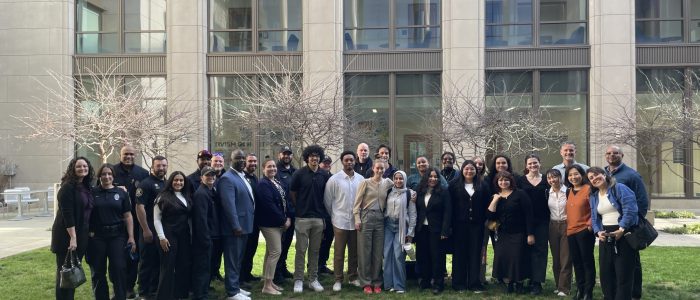
The CTCIP team and volunteers at the winter celebration event for mothers incarcerated at York CI and their children

“Decisions must be made with the children in mind,” said Peck’s-Agaya. “It’s one thing to look at it from the policy perspective, but talking with people who live it really does put a magnifying glass on issues that aren’t always visible. The collateral impact of incarceration isn’t just the impact of an absent parent, it’s also financial and emotional.”

To better incorporate lived experience into its work, CTCIP will involve scholarship recipients in the planning for Parental Incarceration Awareness Month, providing leadership and professional development opportunities.

“The experiences they’ve had are so unique and challenging – we want to get their voices involved,” Peck’s-Agaya said. “What do they want other kids or the legislature to know? Our work is to ensure services reflect their needs, so their perspective is important in all we do. More importantly, we want them to feel a sense of community.”

Click here to read the full report.

CTRP3 Statement Reaffirms State’s Commitment Against Racial Profiling

At its last meeting on February 19, the Connecticut Racial Profiling Prohibition Project (CTRP3) advisory board released a statement reaffirming Connecticut’s “unwavering” commitment against racial profiling in law enforcement.

The statement was released in light of the recent U.S. Supreme Court decision that permits federal immigration agents in Los Angeles to consider race, language, location, and type of work in certain enforcement actions.

“It is important to note that the Supreme Court’s temporary decision applies only to federal immigration enforcement actions in Los Angeles and does not affect state or local law enforcement,” the statement says. “CTRP3 recognizes that such rulings can cause public concern. It is therefore essential to reaffirm that Connecticut’s laws remain clear: racial profiling is prohibited, and every law enforcement officer in the state is required to uphold this standard.”

CTRP3’s ongoing work in the collection and analysis of stop data has created an accountability system that promotes fairness, transparency, and trust between law enforcement and the communities they serve.

“Connecticut remains steadfast in its dedication to fair, impartial, and just policing for all residents,” the statement concludes.

Document with heading and text

CLICK HERE to download the full statement.

For more information about the Alvin W. Penn law and the Connecticut Racial Profiling Prohibition Project’s history, mission, and recent work, please visit the CTRP3 website.

IMRP Sponsors Pete Buttigieg Democracy Discussion

January 28, 2026

On Saturday, January 24th, a select group of UConn School of Public Policy students, faculty, staff and alumni joined IMRP staff, partners, and invited community members for a simulcast screening of The Connecticut Forum event: On Democracy and the Future of the Parties: Pete Buttigieg in Conversation with Jonah Goldberg.

The live program, hosted in the main Mortensen Hall theater, had been sold out for months to Connecticut Forum season subscribers. By sponsoring the simulcast, SPP and IMRP were able to create an intimate gathering where interested individuals could access the program and watch it together.

IMRP Director Andrew Clark and School of Public Policy Director Dr. Angie Eikenberry provided welcome remarks and gave thanks to The Connecticut Forum staff and others who made the event possible.

“We’re very grateful to help sponsor tonight.” said Clark. “The Institute works in public policy with state and local elected officials and leaders. Much of what we do is focused on the theme of tonight – getting people together and having difficult conversations.”

The simulcast audience was thrilled as former Secretary of Transportation Pete Buttigieg unexpectedly took the stage in the Belding Theater to personally welcome the simulcast audience who would otherwise be watching him on screen.

He thanked the audience for braving the frigid temperatures to be there in person.

“It’s so important to come together in 3D, in real life,” he said. “This is one of those seasons that calls for us to do that.” He then raced to the theater next door to start the live program, calling out, “Get to know your neighbors!”

Read more about the content and discussion of “On Democracy and the Future of the Parties” in this UConn Today article.

A special Connecticut Forum and School of Public Policy / IMRP Forum Encore! event is being held at 11 a.m. on Tuesday, Feb. 3rd, at the Hartford Public Library’s main branch across from the UConn Hartford campus.  “From Campus to Capitol: The Future of Civic Engagement in CT”  is an open-to-the-public community discussion featuring Secretary of the State Stephanie Thomas, UConn student leader (and IMRP intern) Ryan Engels, and additional speakers to be announced. Frankie Graziano, host of The Wheelhouse on Connecticut Public Radio, will moderate the discussion.

There is no cost to attend this event. Those interested or with questions can email IMRP@uconn.edu or info@ctforum.org for more information.


CTRP3 to Host First Community Forum of 2026

January 15, 2026


The Connecticut Racial Profiling Prohibition Project (CTRP3) will host its first community forum of the year on Wednesday, January 28th at 6:30 pm at the Trumbull Public Library. 

Public forums are held four times a year in cities and towns across the state.

“These forums are an opportunity to bring together local law enforcement, community leaders, and the public for an open, honest, and transparent discussion about policing and traffic enforcement in their neighborhood,” said Ken Barone, CTRP3 project manager and Associate Director of the Institute for Municipal and Regional Policy.

The sessions encourage community members to ask questions, share experiences, and offer feedback, while law enforcement representatives explain policies and respond directly to concerns. 

Community forums have also increased public awareness of the Alvin W. Penn Act and the need to address community-identified priorities related to fairness and roadway safety. 

A dozen CTRP3 community forums have taken place since 2019 across Connecticut in cities and towns including Bridgeport, Cheshire, Danbury, Enfield, East Hartford, and Windham, among others.

RSVPs are not required for the event. Attendees are encouraged to arrive at 6:00 pm when doors open for free refreshments. The program will begin at 6:30 pm.

This event is co-sponsored by the Commission on Human Rights and Opportunities (CHRO) and the Commission on Racial and Ethnic Disparity.

For additional information please visit ctrp3.org or email IMRP@uconn.edu.

CTCIP Hosts Winter Family Celebration at York Correctional Institution

January 13, 2026

Pizza from Papa John’s and cookies from Costco. 

Gifts and books for kids of all ages, from newborns to teenagers. 

An impromptu game of Duck, Duck, Goose. 

The only atypical things about Saturday’s Winter Wonderland holiday party were the January date and the venue: York Correctional Institution in Niantic, Connecticut. 

Twenty incarcerated mothers were joined by their children, caregivers, and correctional staff for the CT Children with Incarcerated Parents Initiative (CTCIP) sponsored event, the culmination of months of planning focused on family connection and child-centered engagement.  

In late September 2025, the CTCIP team at UConn’s Institute for Municipal and Regional Policy (IMRP) discussed ways to acknowledge Children with Incarcerated Parents Awareness Month in October and plan for a year-end event. With limited time, the team decided to create something new. As the longest-running IMRP initiative, funded by the Connecticut General Assembly since 2008, CTCIP wanted an event that reflected its mission and could stand on its own. 

That’s when Kate Mazzotta, CTCIP Policy and Research Associate, raised a key question: “Why can’t we do it at a facility?” 

York Correctional Institution, already a partner in several IMRP initiatives including the International Justice Exchange (IJE), and home to motherhood and caregiver-focused programming, was quick to respond. 

“We pitched the idea to York as we’ve been doing great work together in family engagement. We wanted to expand and showcase the facility’s commitment to these types of programs,” explained IMRP Operations Coordinator Irvine Peck’s-Agaya, who also serves as head of the CTCIP team.  

Gift wish list items piled up at IMRP offices

Roles were quickly defined. York provided the space and the participants. IMRP funded and planned the event, including food, gifts, and activities. Elizabeth Canavan, CTCIP Educational Resource Coordinator, created an Amazon gift wish list of toys and books based on the anticipated ages of children attending. Through outreach to community partners and promotion on social media, over 200 items were purchased, nearly all on the list. Additional items were donated through the Hartford Mayor’s office and via volunteer Deb Martinez who does similar work at Cheshire correctional institution.

Mazzotta then cross-referenced the gift list with names provided by York to ensure each child received at least three presents selected specifically for them.

“The gifts were really intentional,” said Mazzotta, who admitted her office looked a bit like “Santa’s workshop” in the week leading up to the event.

“How did you know I love these things?” exclaimed one teenager as she opened her gifts. 

The four-hour celebration included arts and crafts, hula hoops and games, and photo backdrops where families could take pictures to frame and keep. Pizza, snacks, and juice were available throughout the afternoon. 

“It went so smoothly,” said Peck’s-Agaya, noting the spontaneous game of Duck, Duck Goose. “I’m really impressed with DOC’s ability to be less structured at the event and to let the moms be parents in the moment.”

Arts and activity tables were set up for children to enjoy.

“Everyone was in good spirits,” agreed Mazzotta. “The moms and the kids were so excited. It exceeded all our expectations.” She added that CTCIP is already thinking about future programming. 

“As we are expanding our organization and the scope of work we do, programming is a big part of that. Children with Incarcerated Parents are such an underserved population. For us, it’s important to give them a sense of normalcy, to bridge the gap between what’s allowed at a prison.” 

Peck’s-Agaya echoed that sentiment. “A lot of our work tends to lean toward policy,” she said. “We want more visibility with families and caregivers. This was a good way to do that. It’s the start of the year and we want to reintroduce CTCIP to the DOC and to the legislature; to say we’re here and we’re creating new possibilities.”

As CTCIP enters its next phase, the York celebration represents a renewed commitment to pairing policy leadership with meaningful, child-centered experiences.

“Can’t wait for next year!” agreed one corrections officer as the event wrapped up. 

Mazzotta, 2nd from right, and Peck’s-Agaya, far right, with the CTCIP at York CI


IMRP Hosts Culture Change Summit with CT DOC

December 17, 2025

Building the Next Phase of Culture Change: Highlights from the Winter 2025 CTDOC/IMRP/Amend Summit

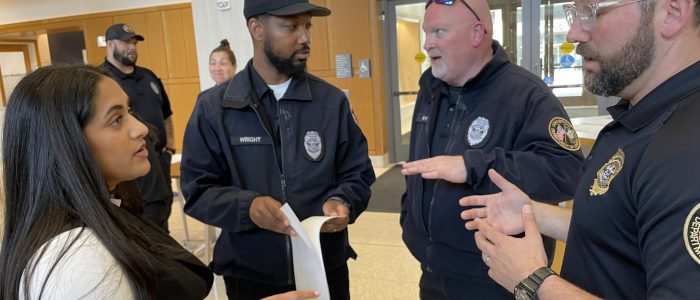
On December 16, 2025, more than 40 leaders and staff from across the Connecticut Department of Correction (CTDOC) gathered at UConn Hartford for Day 1 of the Winter 2025 Culture Change Summit. The two-day summit, convened by the Institute for Municipal and Regional Policy (IMRP) in partnership with Amend at the University of San Francisco, supports Connecticut’s ongoing efforts to advance a safer, healthier, and more effective correctional culture.

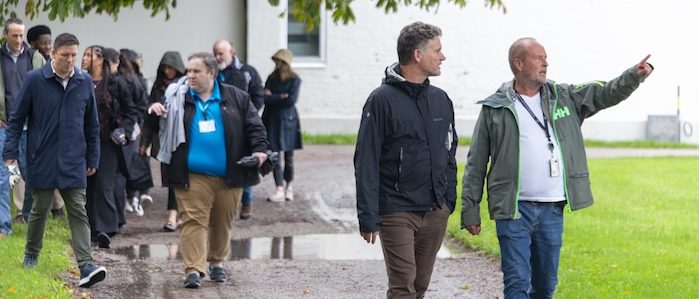
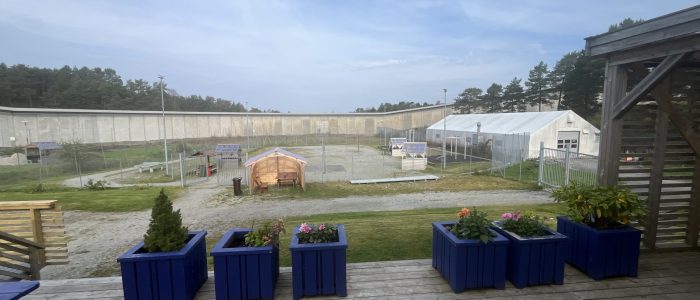
Over the past year through the IMRP’s International Justice Exchange, CTDOC cohorts have traveled to Norway, the United Kingdom, Washington, Oregon, and California to learn from correctional systems leading innovative reform efforts. Those international learning experiences, combined with pilot initiatives at York and Garner Correctional Institutions, have helped establish a shared foundation for culture change grounded in staff safety, wellness, and empowerment. Core principles such as normalization, security, and progression have guided this work, with the goal of improving outcomes for both staff and incarcerated individuals.

The summit brought together CTDOC leadership, facility-based teams, training staff, and partners to align around a shared purpose, deepen collective understanding, and begin shaping actionable recommendations for 2026.

A Day of Shared Learning and Reflection

The day opened with welcoming remarks from IMRP and Amend leadership, setting expectations for collaboration and framing the summit as a bridge between learning and action.

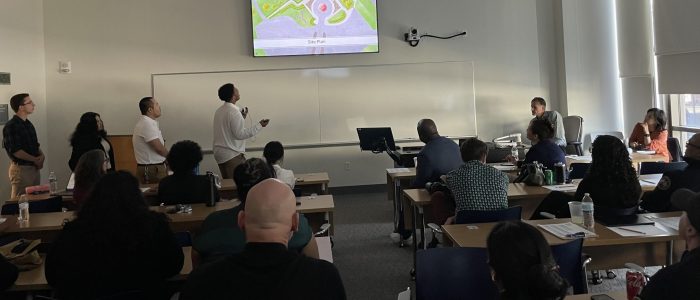
The morning featured cohort presentations from teams representing Garner CI’s CREW, York CI’s CORE, the Maloney Training Academy and Training-for-Trainers (T4T) program, and normalization teams from both York and Garner. Each group reflected on key international learning moments, how those insights are shaping their work, progress made at the site level, and the obstacles and opportunities ahead. Together, the presentations painted a picture of meaningful momentum, alongside clear areas where continued investment and coordination will be essential.

IMRP Director Andrew Clark welcomes attendees to the Culture Change Summit

A guided discussion followed, surfacing common themes and preparing participants for the afternoon’s hands-on work.

Turning Insight into Action

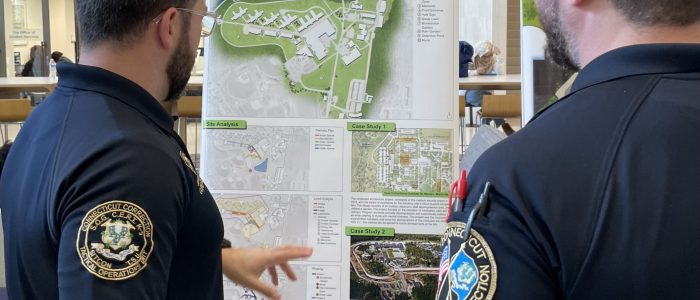
After lunch and informal networking in the Hartford Times Building atrium, participants moved into Innovation Labs, rotating through two facilitated workgroups focused on translating ideas into concrete next steps. Across four topic areas, each lab developed three to five actionable recommendations, noting feasibility considerations and resource needs.

The Innovation Labs focused on:

  • Staff Training and Professional Identity, exploring how training can more fully support culture change and how trainers can serve as change agents.

  • Resource and Activity Team Expansion, identifying ways to strengthen and grow existing teams while engaging more staff in the change process.

  • Normalization and Environmental Transformation, examining practical, no-to-low-cost strategies to create more normalized environments, routines, and experiences.

  • Research and Evaluation, considering how progress should be measured and how data and storytelling can help capture and sustain positive change.

“A major challenge is measuring a program whose effect is the absence of bad things,” said Dr. Lydia Wileden, who led the research and evaluation session. “CORE & CREW’s goal is to reduce adverse events and behaviors in correctional facilities, which ultimately makes officers’ jobs safer and easier. When that work is successful, it can go unnoticed. People aren’t always aware they’re benefiting from an improved environment. The question is, can we design creative metrics that reflect the full impact of this work, including what didn’t happen because the intervention was effective?”

The day concluded with outlining of next steps and a commitment to share outcomes with all participants in January. These recommendations will inform continued collaborative culture change work launching in 2026.

“DOC officers are excited about the next phases of the program,” said Irina Ahmed, Research and Policy Associate for the IMRP, who joined the most recent immersion trip to Norway in November. “Officers who were originally uncertain about the impact the activity and resource teams could have are now the biggest – and most enthusiastic – proponents of the training.”

Day 2 of the summit, scheduled for January 2026, will culminate in final presentations to CTDOC leadership, ensuring that staff-generated insights and recommendations directly inform decision-making at the highest levels.