Earlier this month, IMRP Director Andrew Clark led a Connecticut delegation on an international immersion program to Norway and Northern Ireland through the International Justice Exchange (IJE), hosted by IMRP partner Amend at UCSF. The trip marked Clark’s third participation in the exchange program, which brings together correctional leaders, practitioners, and policymakers to explore approaches to prison culture transformation and rehabilitation.
Connecticut joined delegations from Maine, Massachusetts, and North Dakota, along with invited guests, in partnership with the Norwegian Correctional Service and the Northern Ireland Prison Service. The Connecticut delegation included State Representative Renee LaMark Muir, Dr. Jay Lawrie, director of the Criminal Justice Program at Albertus Magnus College and former Connecticut Department of Correction professional, and Yale Prison Education Initiative Program Coordinator Emme Magliato, along with representatives from the Connecticut Department of Correction.
Before formal presentations and facility visits began, participants visited Oslo’s Nobel Peace Center, which highlights the legacy of the Nobel Peace Prize and the ideals it represents. The center’s current exhibit, “DEMOCRACY ON THE BRINK,” offered a timely reflection on the importance of productive dialogue – one of IMRP’s core values.
Delegates then participated in training sessions at the Norwegian Correctional Service College and Education Center (KRUS) and toured several Norwegian correctional institutions. Throughout the program, participating states shared updates on their own correctional culture-change initiatives. Gisselle Miranda, a correctional officer at Garner Correctional Institution in Newtown, Connecticut, presented on the facility’s C.R.E.W. Resource Team and its ongoing efforts to support staff wellness and positive institutional culture.
Drawing on more than 20 years of experience in Connecticut corrections, Lawrie said the exchange highlighted the importance of supporting correctional staff alongside incarcerated populations.
“What really resonated with me, having come from a career in corrections, is that anywhere in the world where correctional professionals can do this work and feel a sense of pride, respect, appreciation, and accomplishment is fantastic,” he said. “It gives me hope that even though there are tremendous differences between systems, there are still ways we can bridge that gap here in Connecticut and help current staff feel that same sense of purpose and support.”
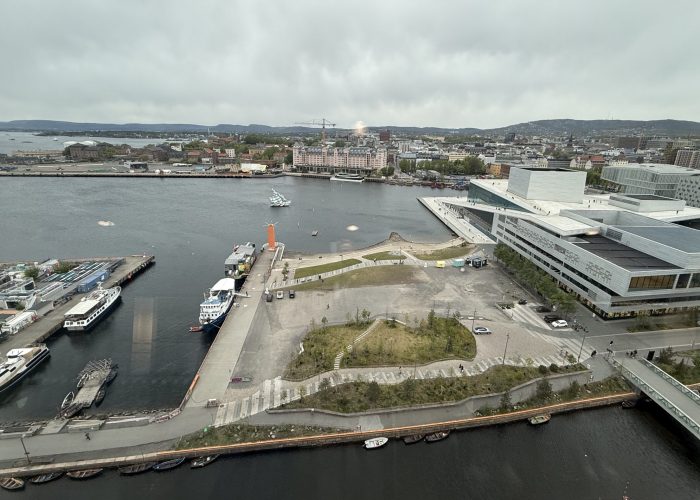 Oslo cityscape
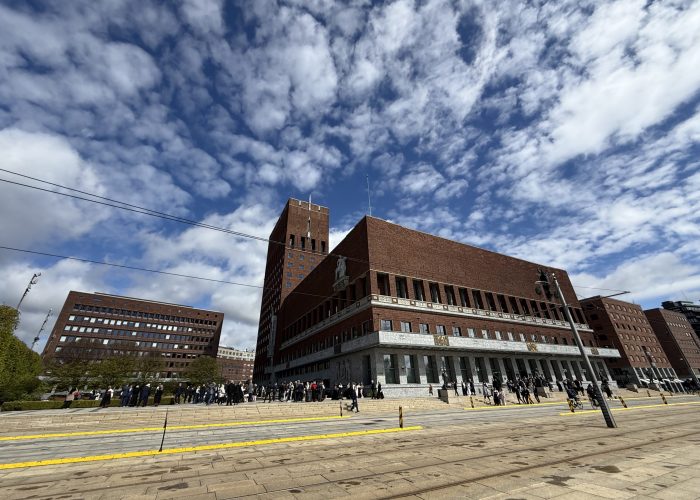 Oslo City Hall, Norway
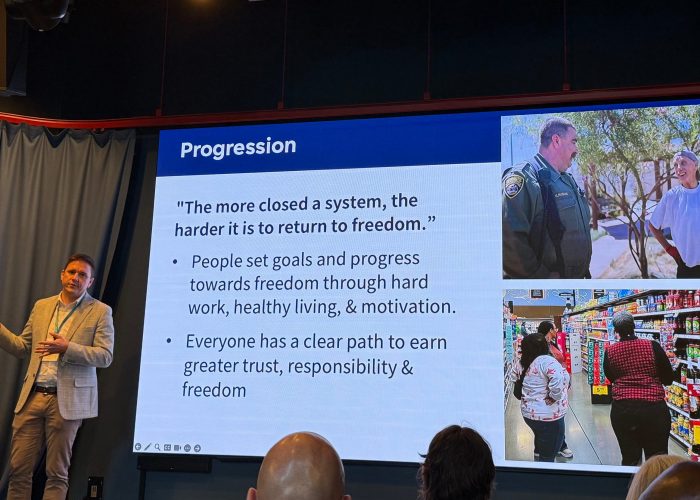 Presentation by the Norwegian Correctional Service
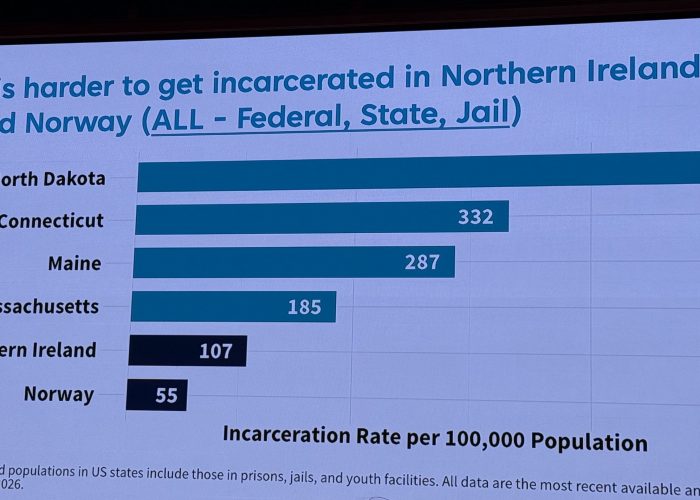 Incarceration statistics from the Norwegian Correctional Service
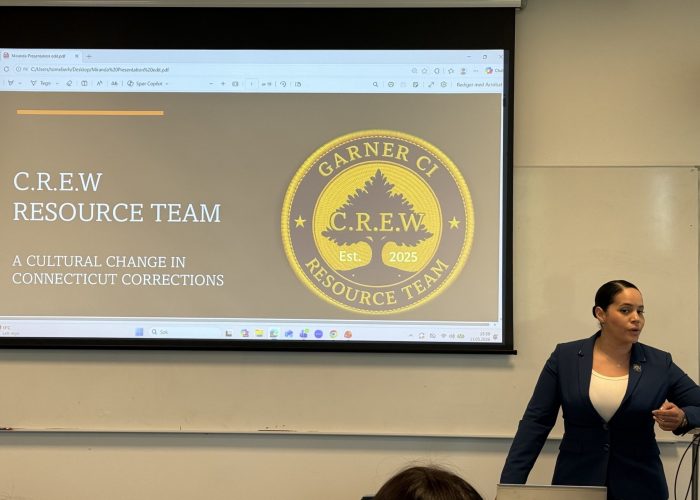 Gisselle Miranda of the Connecticut delegation leads a presentation on the C.R.E.W. resource team at Garner correctional institution
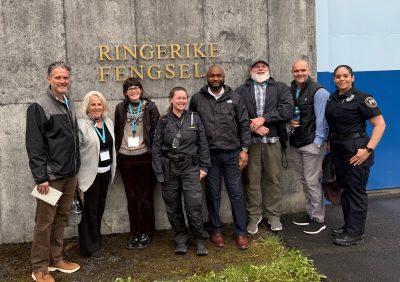
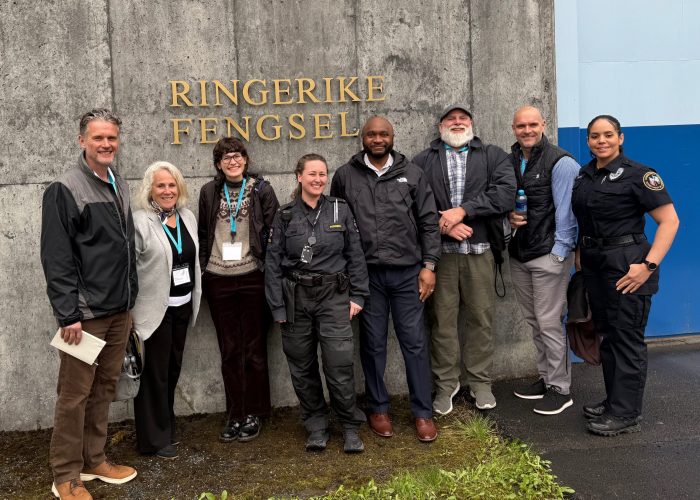 The Connecticut delegation outside Ringerike prison
 Flight from Oslo to Dublin
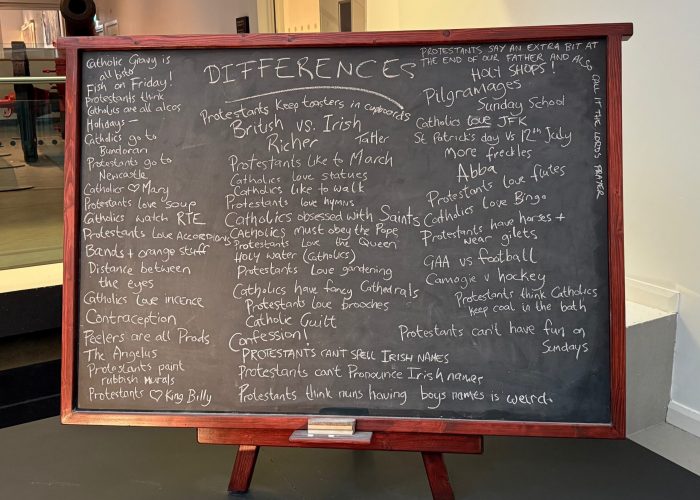 Entry display at Ulster Museum, Belfast
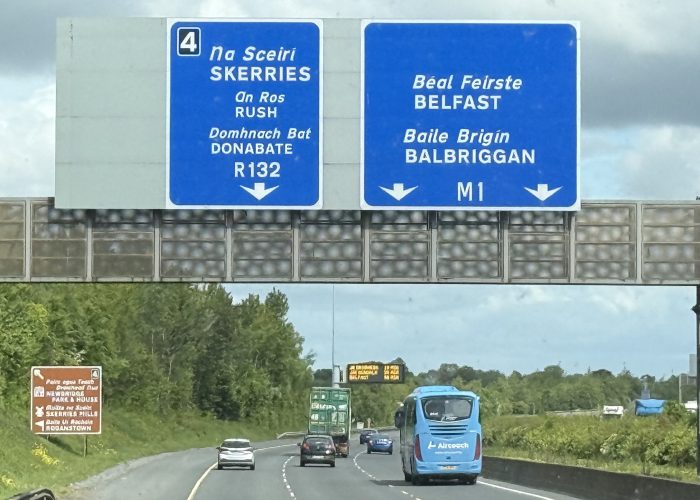 En Route to Belfast
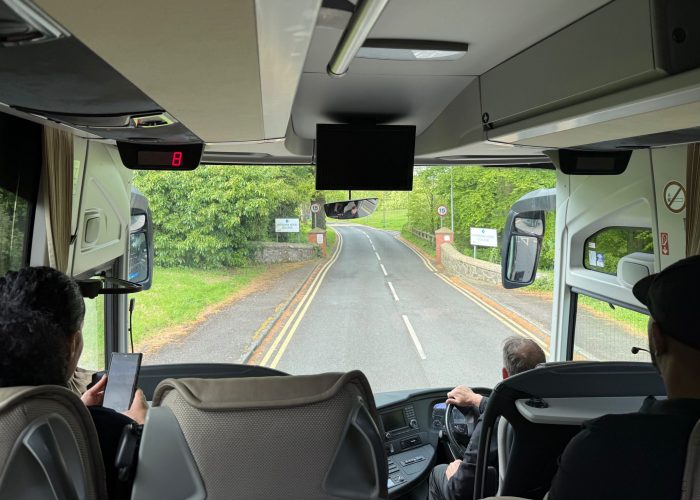 Entering one of the prison sites
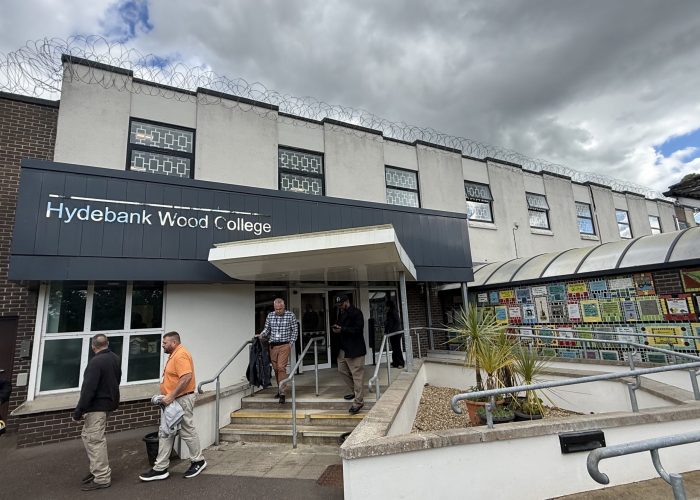 Hydebank Wood College and Women's Prison
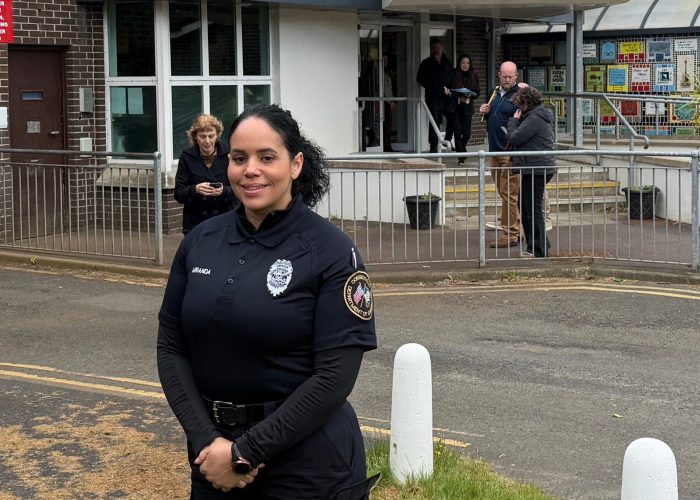 Garner (CT) Correctional Officer Gisselle Miranda outside Hydebank prison
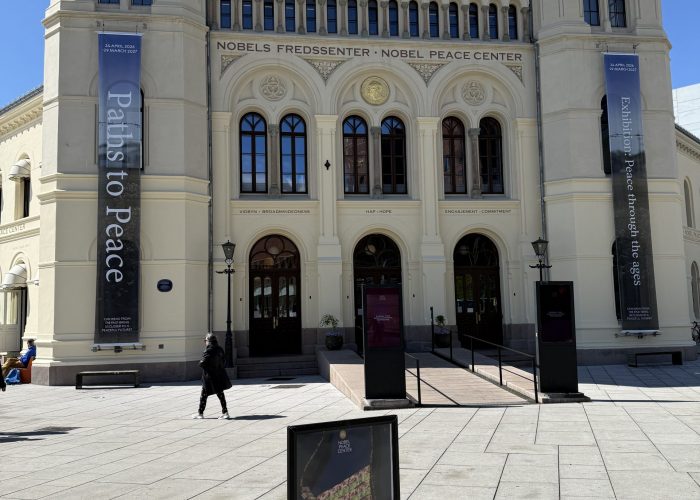 Oslo's Nobel Peace Center is a showcase for the Nobel Peace Prize and the ideals it represents
 Outside the Nobel Peace Center in Oslo, Norway
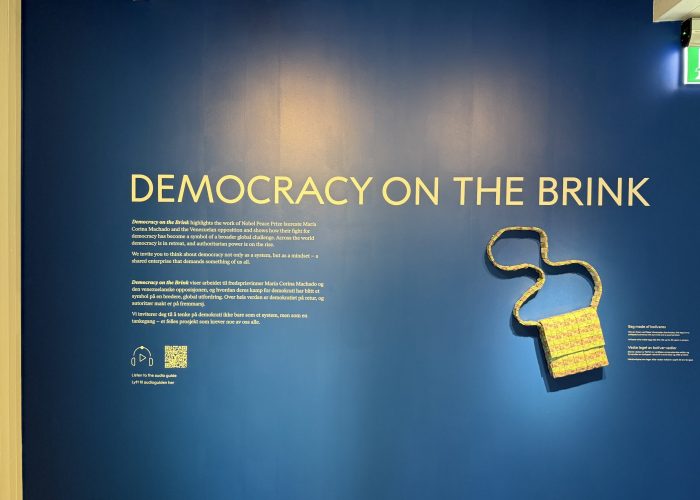 Democracy on the Brink exhibit at the Nobel Peace Center
 Democracy and Autocracy exhibit at the Nobel Peace Center
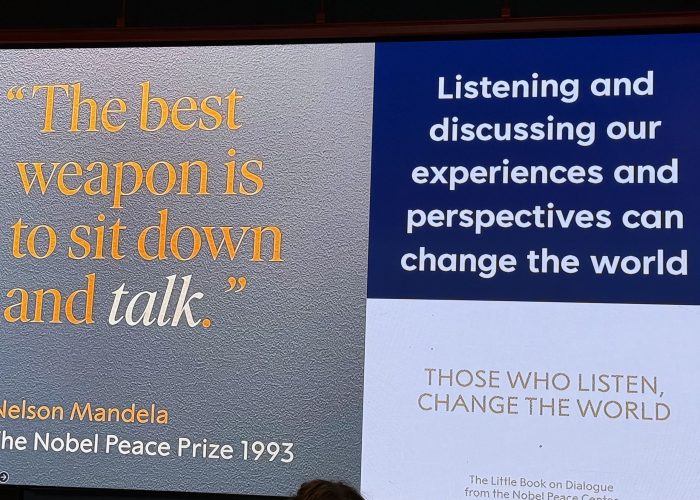 Exhibit at the Nobel Peace Center
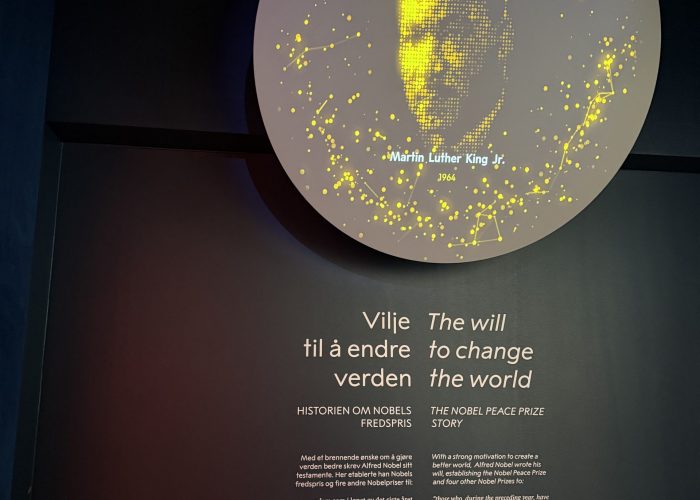 MLK Jr. exhibit at the Nobel Peace Center
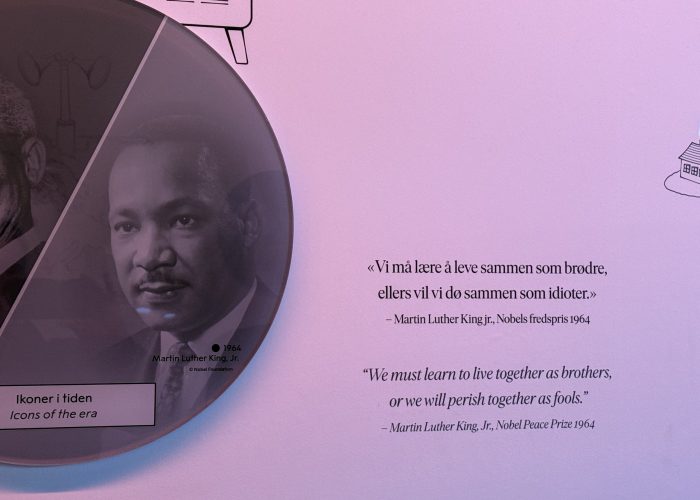 MLK Jr. exhibit at the Nobel Peace Center
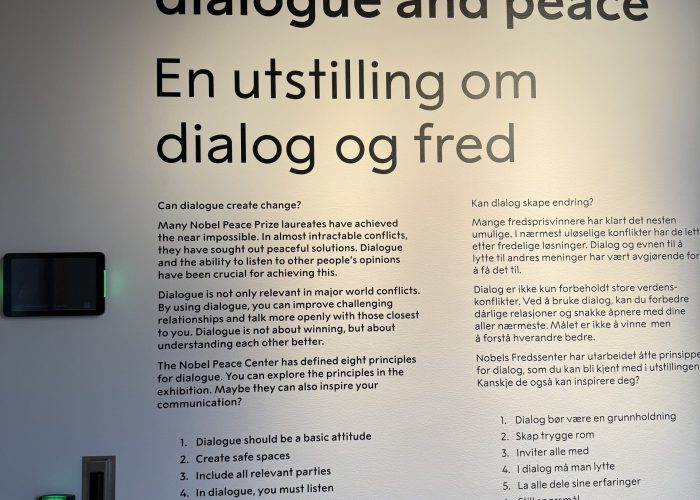 Dialogue exhibit at the Nobel Peace Center
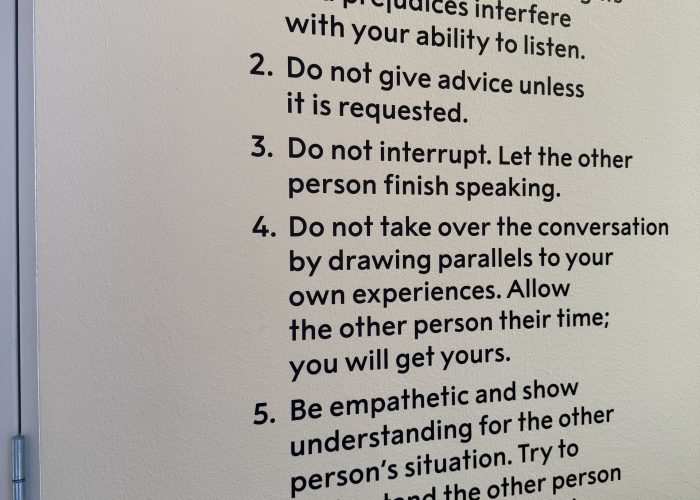 Sage advice at the Nobel Peace Center
A second phase of the trip brought the delegation to Belfast, Northern Ireland, via Dublin, where participants examined the history and evolution of prison reform in the region. It was Clark’s first visit to Northern Ireland as part of the exchange.
After a panel presentation at the Ulster Museum on changes within the prison system since The Troubles, the delegation visited Hydebank Wood College, a facility that houses primarily women as well as young adult men ages 18 to 21.
“They base their mission on learning and skills and strive to have 100% of residents participating in the educational curriculum provided by Belfast Met,” said Clark, referring to the facility’s 2015 name change as part of broader correctional reform efforts. “Prior to 1998 and the Good Friday Agreement, many prisons in Northern Ireland housed individuals who viewed themselves as political prisoners. After years of violence directed at both prison facilities and staff, the system underwent a major shift in philosophy and practice. Those changes have contributed to significantly increased positive outcomes for both residents and staff.”
The principles at Hydebank Wood College – “to support, challenge and inspire all those in our care on their journey to be the best they can be” – closely mirror those of the Norwegian Correctional Service, which emphasizes preparing incarcerated individuals to successfully reintegrate into society as productive neighbors and community members. Similar approaches have informed the work of Amend and IMRP within Connecticut correctional institutions, with a focus on rehabilitation, staff wellness, and safer correctional environments.
Lawrie also emphasized the importance of empowering front-line correctional staff as part of broader culture change efforts.
“Line staff are the most valuable resource in any facility, yet their expertise is often underutilized,” he said. “No one understands the day-to-day realities better than the staff working directly inside these facilities. Giving them autonomy, valuing their input, and creating room for professional growth are all essential to building healthier correctional environments.”
For Clark, the exchange underscored the value of international collaboration and the importance of continuing to examine innovative approaches to prison culture and rehabilitation.
“These experiences challenge us to think differently about safety, rehabilitation, and human dignity,” Clark said. “The opportunity to learn directly from correctional professionals in Norway and Northern Ireland helps strengthen our own efforts in Connecticut and reinforces the importance of building correctional systems centered on respect, accountability, and positive change. Doing it in partnership with states across New England and the rest of the country encourages us to challenge ourselves to learn and grow together.”
Read about previous International Justice Exchange trips and partnerships in the IMRP News Archives:
Lessons in Humanity: MPA Grad Gains Insights from Norway’s Correctional Model
IJE Work Feature in CT Mirror Article
IMRP Facilitates CTDOC Culture Change Collaboration
Best Practices in International Correction: Lessons from Norway