IMRP INTERN INSIGHTS
Written by Josephine Burke
I first learned about the Sentencing Commission in the fall of 2023, during my freshman year at UConn, when Executive Director Alex Tsarkov visited my advocacy and public policy course as a guest speaker. As Alex spoke to our class about the Commission’s efforts to promote pretrial justice and to improve outcomes for individuals with mental health treatment needs in the criminal justice system, I immediately felt a connection with the work and knew that I wanted to get involved.
My passion for advocacy and community organizing, coupled with my academic interest in the legal and criminal justice systems, make this internship a perfect fit. As a student with a human rights concentration, I am interested in the ways that historic structures of injustice shape the criminal justice system, and how we can analyze, understand, and work to improve these structures and systems. Working with the Sentencing Commission has allowed me to pull from and explore these interests while gaining new perspectives about how our systems function and how to enact meaningful change.
A cornerstone of my internship has been the invaluable mentorship of Patricia O’Rourke, CTSC Research Associate. Though I’m early in my degree, I’ve been able to engage directly with meaningful projects due to her unwavering support, guidance, and trust. Alongside Patricia, I have begun to compile and distribute resources to increase awareness of the Commission’s projects and initiatives and to make its work more accessible to students and professors.
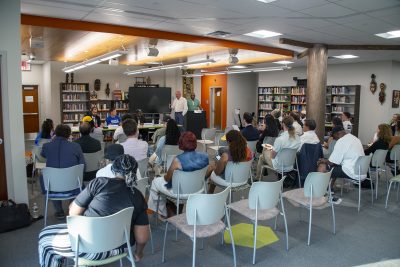
Most of my work this summer has involved projects related to the Mental Health Subcommittee of the Sentencing Commission. Some highlights include researching for and drafting a memo addressing the concerns of a lawmaker about the impact of recently passed legislation on the ability of incarcerated individuals with mental health treatment needs to return to community settings and creating a presentation on the connections between mental health treatment and reentry.
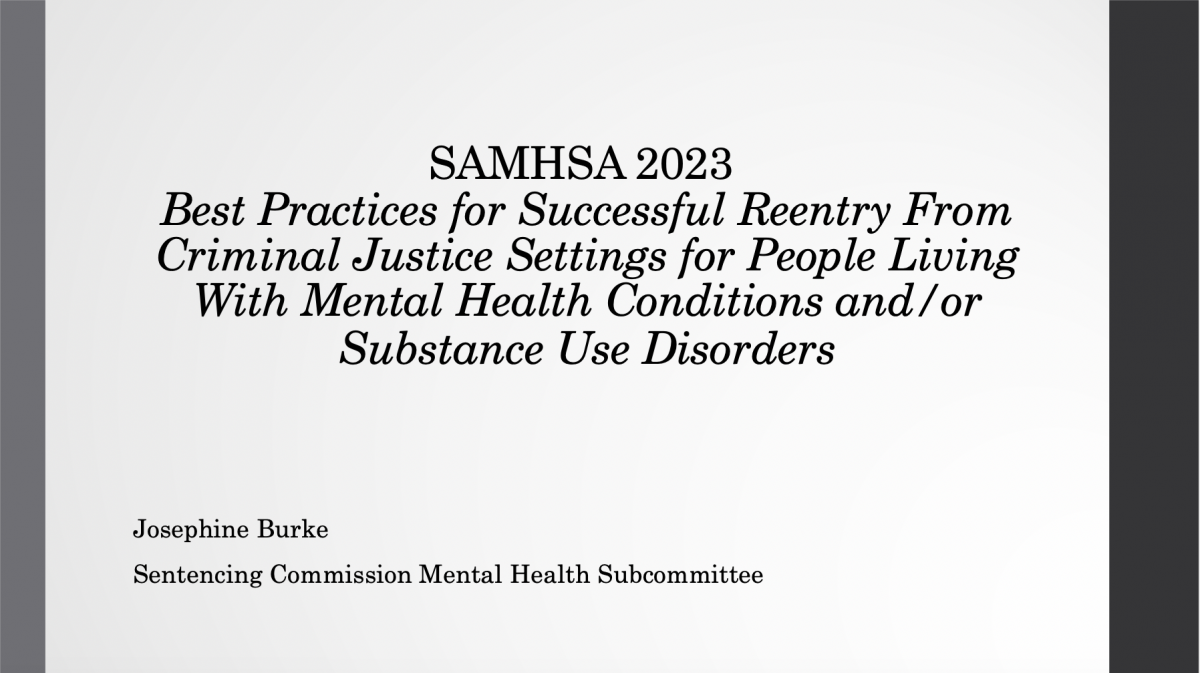
The presentation to the Sentencing Commission Mental Health Subcommittee provided an overview of the SAMHSA 2023 report, Best Practices for Successful Reentry From Criminal Justice Settings for People Living With Mental Health Conditions and/or Substance Use Disorders, and introduced housing as a key aspect of reentry. The main goal was to give a comprehensive review of the guide to the Mental Health Subcommittee members by discussing key elements of reentry for individuals with mental health and substance use treatment needs, as well as evidence-based interventions for improving reentry outcomes for these individuals.
In addition to the guide, I had the opportunity to supplement the presentation by building on a topic of personal interest that I have spent much time researching this summer: Housing. Given housing’s pivotal role in successful reentry, I was excited to reintroduce this issue to the commission and open a conversation that could potentially lead to further research.
Preparing for the presentation involved developing a deep understanding of the guide and evaluating the information most relevant to the Commission’s focus on reentry, including housing. While it was at first intimidating to present to a group of experienced individuals in the criminal justice, advocacy, and research fields just a few months into my first-ever internship, I am happy to have been in a position to convey crucial information about the challenges faced by those with mental health and substance use treatment needs in the transition from carceral settings.
This internship has allowed me to build connections with dedicated researchers and advocates, explore and expand my interests, and understand what it means to have a real impact. The experiences and knowledge I have gained underscore the heavy impact of research in enacting progress, allowing me to explore many available subject areas and potential career paths. I am proud to have been a part of the Commission team this summer and I continue to be inspired by the work being done.

Josephine Burke is an honors undergraduate student at the University of Connecticut studying political science, human rights, and Spanish. She has been interning with the Connecticut Sentencing Commission since May.
For more information about the Sentencing Commission, visit their website: https://ctsentencingcommission.org/
Interested in working with the IMRP? Check out our “Work with Us” page for information on staff positions, student employment and internships.